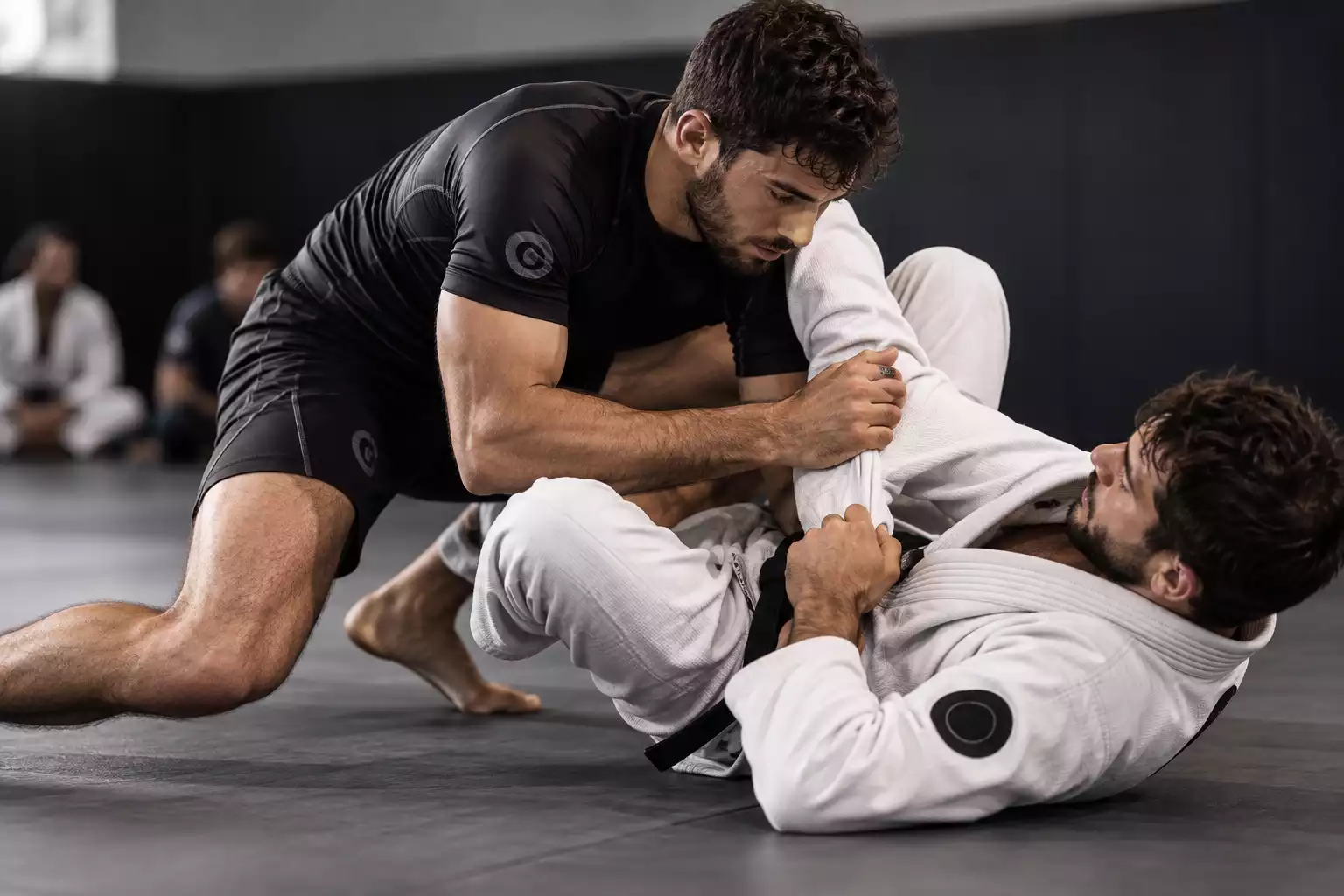
Stepping into a Brazilian Jiu-Jitsu academy for the first time can feel intimidating. You may not know the techniques, find yourself training alongside more experienced practitioners, and discover a discipline where being challenged is simply part of the experience.
And that is precisely one of the things that makes Jiu-Jitsu so unique.
Over time, BJJ training develops more than physical abilities and technical skills. It teaches you to stay calm under pressure, accept that progress does not happen immediately, keep trying, and recognize improvements over the long term.
For many practitioners, Jiu-Jitsu becomes much more than a sport: it becomes a way to develop self-confidence, discipline, and resilience.
Why Jiu-Jitsu Can Build Self-Confidence
The confidence developed on the mats does not simply come from learning how to fight. It grows gradually through experience and repetition.
Learning to Stay Calm Under Pressure
In Jiu-Jitsu, there will inevitably be moments when you find yourself in a difficult position.
A training partner may establish control, apply pressure, or threaten a submission. A beginner's first instinct might be to use all their strength to escape.
With experience, that reaction begins to change.
You learn to breathe, identify the problem, protect yourself, and gradually work toward an escape.
This process is at the heart of Jiu-Jitsu: staying composed even when a situation becomes uncomfortable.
Training sessions and sparring allow practitioners to experience these situations repeatedly in a controlled training environment. Over time, they discover that they can face challenges without necessarily panicking.
The ability to take a step back can also be valuable off the mats, especially when a situation requires calm, patience, and clear thinking.
Understanding How Technique Can Offset Certain Physical Advantages
Brazilian Jiu-Jitsu places great emphasis on positioning, control, leverage, and anticipation.
Of course, this does not mean that technique eliminates every difference in weight, strength, or physical conditioning. However, it teaches practitioners to use their bodies more efficiently rather than relying solely on strength.
For beginners, this realization can be significant.
As they begin to understand different positions and successfully perform their first techniques, they can see tangible evidence of their progress.
Confidence no longer comes from an abstract feeling of being “stronger,” but from an accumulation of experiences:
“A few weeks ago, I couldn't do this. Today, I can.”
Learning to Accept Defeat as Part of Progress
This is probably one of the most valuable aspects of Jiu-Jitsu.
Even experienced practitioners can find themselves in difficult situations.
During sparring, you sometimes have to accept that you have lost a position. When a submission is properly applied, you tap to signal to your partner that they should stop.
Then training continues.
Tapping is not a failure. It is part of the learning process and allows practitioners to train while respecting both their partners and their own safety.
Through repetition, you gradually learn something essential: failing at a particular technique does not mean you are failing to improve.
A technique may require dozens of attempts before it works during sparring. A position that once seemed impossible to understand gradually becomes familiar.
Progress in Jiu-Jitsu is rarely linear.
And that is precisely what helps develop resilience.
Jiu-Jitsu Teaches Patience and Discipline
There are no real shortcuts to improving in BJJ.
Knowing a technique does not necessarily mean you can successfully apply it against a training partner who is moving, resisting, and trying to impose their own game.
You have to practice.
Show up again.
And keep trying.
Consistency Over Immediate Results
The most significant improvements are sometimes difficult to notice from day to day.
Then comes a training session when you finally execute an escape you have been working on for weeks. You understand a position more clearly. You use less energy. You begin anticipating your partner's reactions.
These small improvements gradually shape your development as a practitioner.
Jiu-Jitsu therefore encourages a form of discipline based more on consistency than immediate performance.
Training regularly, listening to feedback, working on weaknesses, and accepting periods when progress seems slower are all part of the journey.
Setting Goals Without Becoming Obsessed With Belt Promotions
Belts naturally represent important milestones in a Brazilian Jiu-Jitsu practitioner's journey.
But they are not the only indicators of progress.
A goal can be much simpler:
- Successfully escaping a difficult position.
- Improving your breathing during sparring.
- Understanding a particular guard.
- Refining a technique practiced in class.
- Training consistently for several weeks.
- Participating in your first Open Mat or competition.
These smaller goals allow practitioners to recognize their progress long before receiving a new belt.
They also help build confidence based on something tangible: the work they have put in.
Confidence Also Grows Through Training With Others
Jiu-Jitsu is an individual sport that cannot truly be learned alone.
Every practitioner's progress depends, in part, on their training partners.
You learn alongside people with different skill levels, body types, and styles. A more experienced partner may slow down to help a beginner practice. Two practitioners may repeat a technique together until they both understand it better.
This sense of community is essential.
Finding an academy where you feel welcomed, respected, and comfortable enough to learn plays an important role in a beginner's experience.
The right training environment is not necessarily the one where training is easiest. It is one where everyone can improve while respecting their partners.
Starting Jiu-Jitsu When You Lack Self-Confidence
You do not need to be particularly athletic, flexible, or confident before walking into a Jiu-Jitsu academy.
You are there to learn.
During your first sessions, the most important things are understanding the safety rules, listening to your instructor, communicating with your training partners, and accepting that you will not master everything immediately.
Nobody starts Jiu-Jitsu already knowing how to do Jiu-Jitsu.
Over time, situations that once seemed intimidating become familiar. Movements become more natural. Training partners become familiar faces.
And confidence gradually develops.
Lessons That Extend Beyond the Mats
It would be an exaggeration to claim that Jiu-Jitsu automatically transforms every practitioner's personality.
Everyone experiences the discipline differently.
However, certain habits developed during training can also be useful in everyday life:
- Staying calm when a situation becomes uncomfortable.
- Accepting that you may not succeed on your first attempt.
- Analyzing a problem before reacting.
- Working consistently rather than chasing immediate results.
- Learning from more experienced people.
- Viewing challenges as opportunities for improvement.
Jiu-Jitsu regularly pushes practitioners to confront their limitations, while also giving them opportunities to discover that those limitations can change.
Jiu-Jitsu: Building Confidence One Training Session at a Time
Self-confidence in Jiu-Jitsu does not come from a single victory or a belt promotion.
It develops over time.
A position you understand better. A calmer reaction. A technique you finally execute successfully. A difficult training session that you choose to return to despite the challenges.
It is this accumulation of small experiences that makes Brazilian Jiu-Jitsu such a unique discipline for so many practitioners.
Want to discover Jiu-Jitsu or keep training wherever you are?
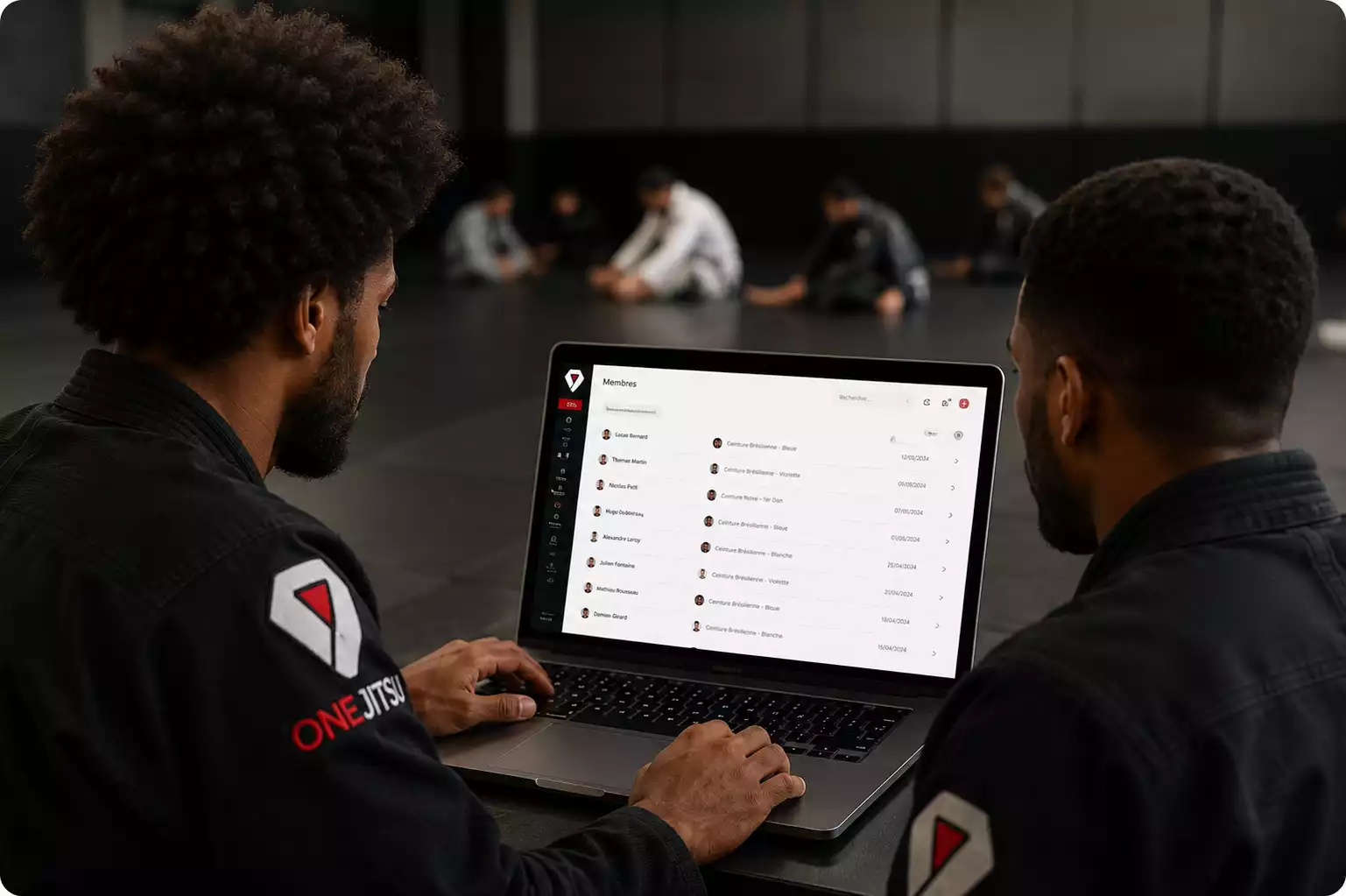
With OneJitsu, find academies, training partners, and Jiu-Jitsu events around the world.
Discover OneJitsu