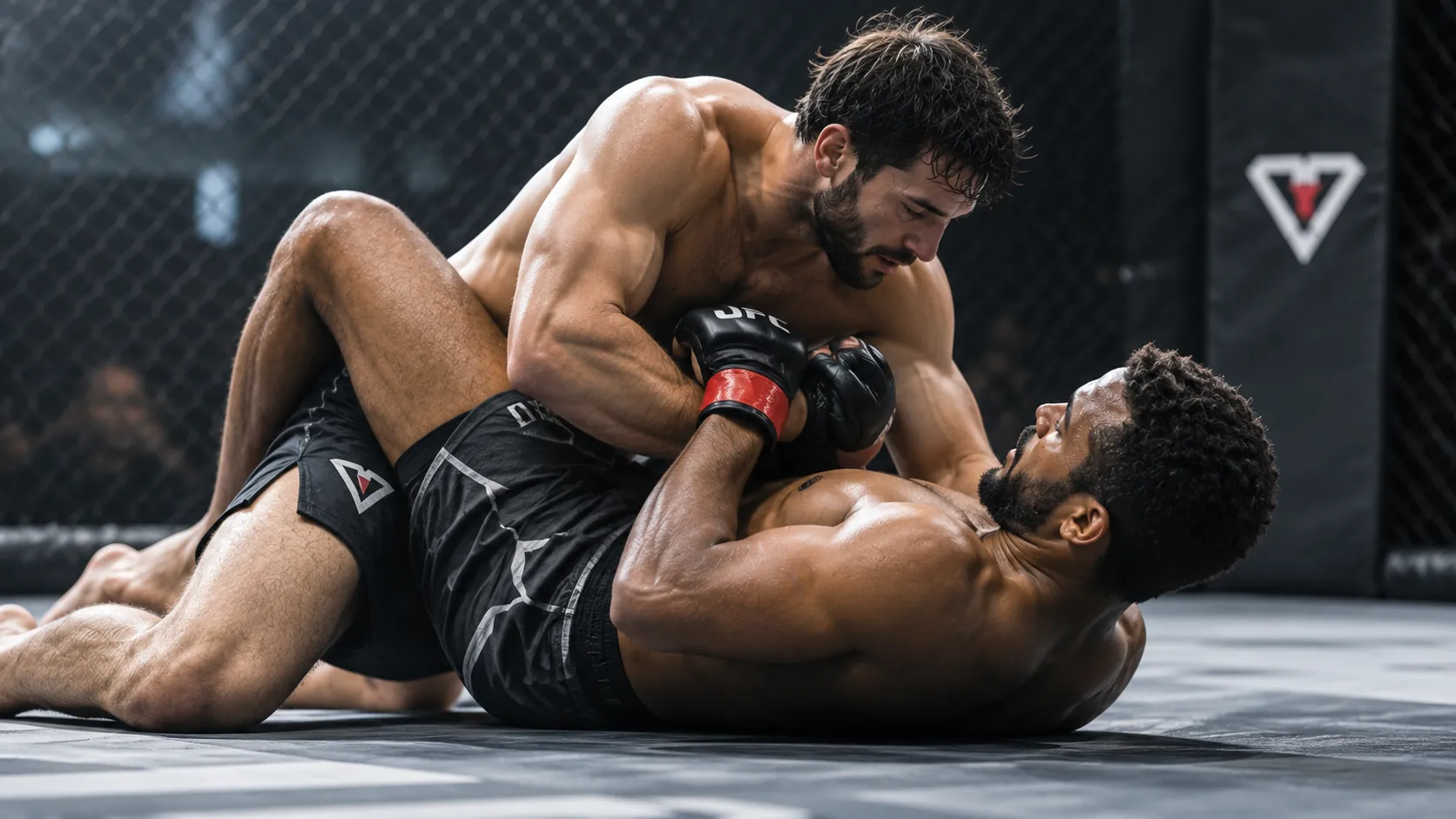
In 1993, at the first UFC tournament, a relatively small fighter stepped into the cage against opponents from very different martial arts backgrounds. His name was Royce Gracie. His specialty was Brazilian Jiu-Jitsu (BJJ).
By winning several of the UFC's earliest tournaments, Royce Gracie demonstrated the effectiveness of ground fighting and submission techniques against opponents who were not necessarily familiar with those situations.
More than thirty years later, mixed martial arts (MMA) has changed dramatically. Modern fighters combine wrestling, boxing, Muay Thai, grappling, and cage control into a highly integrated fighting style.
So, is Brazilian Jiu-Jitsu still essential in MMA, or has it become just one discipline among many?
To answer that question, we need to understand how BJJ transformed early MMA, which techniques remain effective today, and how Brazilian Jiu-Jitsu has adapted to the demands of modern cage fighting.
1. Why Did Brazilian Jiu-Jitsu Revolutionize MMA?
Royce Gracie and the Early UFC: The Rise of Ground Fighting
When the UFC launched in 1993, its original concept was to bring together fighters from different martial arts backgrounds.
The early events operated under far fewer restrictions than modern MMA competitions, including fights without weight classes.
Royce Gracie, representing Brazilian Jiu-Jitsu, won UFC 1, UFC 2, and UFC 4.
His victories attracted attention because they demonstrated something many viewers had underestimated: a fighter skilled in ground control and submissions could neutralize a physically larger opponent or someone primarily trained in striking.
BJJ does not guarantee victory against a stronger or heavier opponent. However, positioning, leverage, and technical control can help reduce certain physical disadvantages.
These early successes helped popularize grappling and accelerated its integration into MMA training.
To explore the origins and fundamentals of the discipline, read our complete guide to Brazilian Jiu-Jitsu.
The Three Fundamental Contributions of BJJ to MMA
Brazilian Jiu-Jitsu introduced several important skills to mixed martial arts.
Ground Position Control
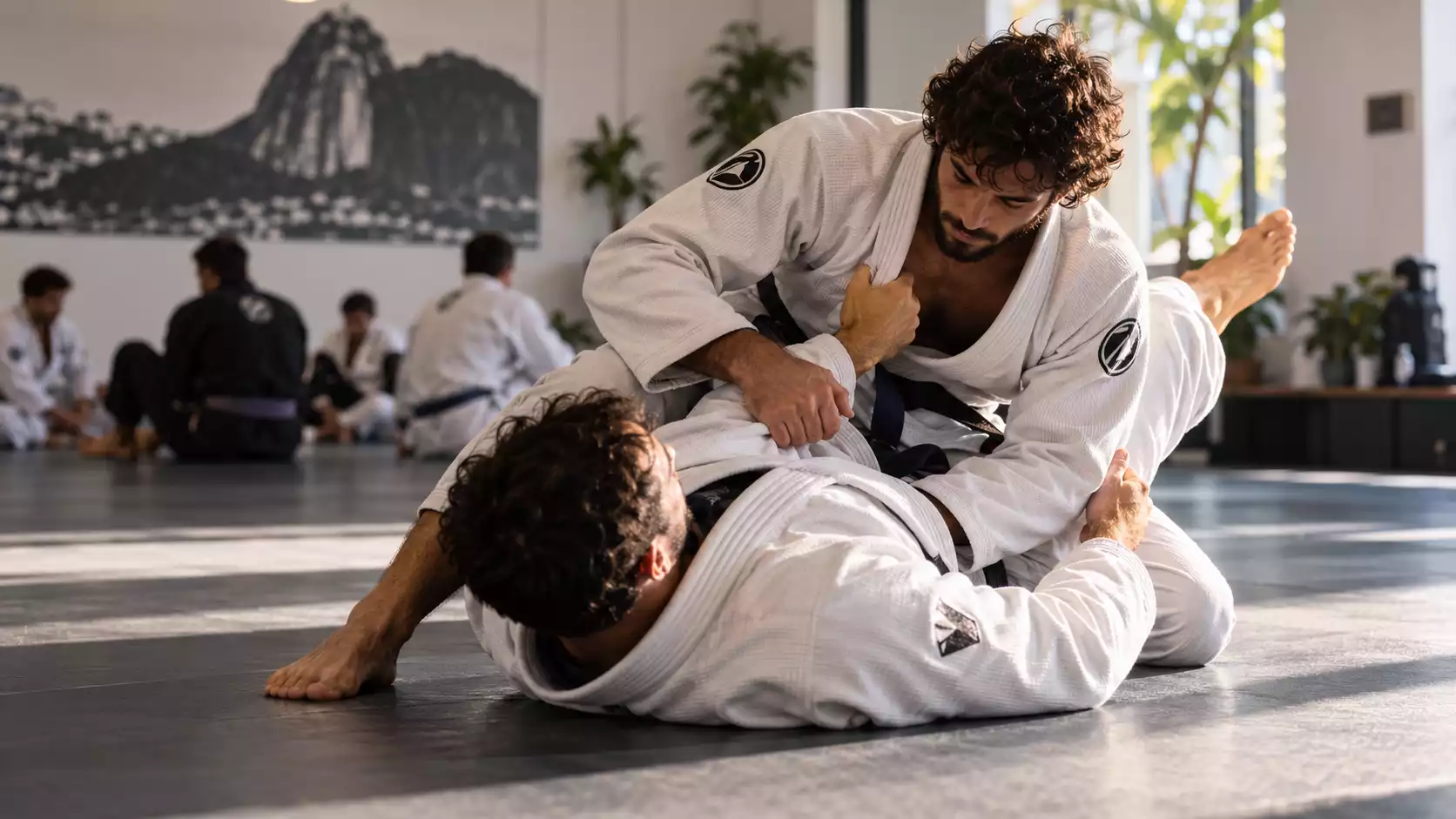
BJJ teaches practitioners how to use body positioning, weight distribution, and leverage to control an opponent, maintain dominant positions, or escape dangerous situations.
Submission Techniques
Chokes and joint locks provide ways to finish a fight without necessarily relying on a knockout.
Their effectiveness depends on the situation, the opponent's skill level, and the ability to establish sufficient control.
Ground Defense
BJJ develops an understanding of dangerous positions, transitions, and submission mechanics.
These skills are essential for recognizing threats and escaping difficult situations on the ground.
Over time, fighters from other martial arts backgrounds began incorporating these techniques into their training.
As submission defense and ground control became more widespread, the advantage once enjoyed by dedicated BJJ specialists became less pronounced.
Brazilian Jiu-Jitsu transformed MMA, but MMA also changed the way Brazilian Jiu-Jitsu is practiced.
2. What Is the Difference Between Traditional BJJ and Brazilian Jiu-Jitsu in MMA?
Sport Brazilian Jiu-Jitsu and BJJ applied to MMA share many techniques, but their rules and tactical priorities are significantly different.
In competitive BJJ, the objective is generally to secure a submission or win through points and other scoring criteria, depending on the ruleset.
In MMA, strikes, takedowns, cage control, and the possibility of winning by knockout or technical knockout fundamentally change the strategy.
How Ground and Pound Changes Ground Fighting
Ground and pound refers to strikes delivered to an opponent on the ground, within the rules of the competition.
In sport BJJ, a practitioner may deliberately remain on their back to play guard, control an opponent, and look for sweeps or submissions.
In MMA, that same position can expose them to punches and, depending on the rules, elbows.
The guard remains useful, but it must be adapted.
Fighters need to control their opponent's posture, limit opportunities for strikes, and create chances to stand up, reverse the position, or secure a submission.
A position that works well in sport BJJ is not automatically advantageous in MMA.
The Role of the Cage and Wall Walking in MMA
The cage has become an important tactical element of modern MMA.
When a fighter is taken down near the fence, they may use it for support while attempting to return to their feet.
This technique, commonly known as wall walking, requires coordination between foot placement, hand control, and takedown defense.
Conversely, a fighter in a dominant position may use the cage to restrict their opponent's movement, maintain pressure, and create opportunities for strikes or positional transitions.
Cage wrestling and wall work are therefore specialized skills that cannot be fully developed through traditional BJJ training on open mats alone.
Why Guard Strategies Are Different in MMA
In sport Brazilian Jiu-Jitsu, different guard positions allow practitioners to slow down an opponent, build attacks, and set up sweeps.
In MMA, the priorities often change because fighters must also defend against strikes.
Wrist control, distance management, hip movement, and transitions back to standing become particularly important.
Fighters must also recognize when a submission attempt could expose them to unnecessary damage or result in losing positional control.
BJJ remains a central part of ground fighting, but its application becomes more selective and closely integrated with wrestling and striking.
3. What Are the Most Effective Brazilian Jiu-Jitsu Submissions in MMA?
Submission techniques continue to play an important role in MMA.
Some are particularly well suited to cage fighting, while others require greater caution because of strikes or the risk of losing a dominant position.
Rear-Naked Choke: One of the Most Important BJJ Submissions in MMA
The rear-naked choke (RNC) is one of the most recognizable submissions in mixed martial arts.
It is typically applied after securing back control.
This position offers several advantages: it limits the opponent's offensive options and creates opportunities to attack the neck while maintaining a relatively strong position.
The threat of strikes may also force an opponent to adjust their defense, occasionally creating openings for the choke.
The rear-naked choke consistently appears among the commonly used submissions in major MMA competitions.
Guillotine Choke: A Submission During Takedown Transitions
The guillotine choke can become available when an opponent lowers their head, attempts a takedown, or exposes their neck during a transition.
This makes it particularly relevant to the exchanges between standing and ground fighting.
However, successful execution requires timing and positional control.
An unsuccessful attempt can allow the opponent to improve their position.
Are Triangle Chokes and Armbars Still Effective in MMA?
Triangle chokes and armbars remain important techniques in Brazilian Jiu-Jitsu.
They can finish fights when an opponent makes a positional mistake or leaves an opening during a transition.
However, in MMA, attempting these submissions from guard can sometimes expose the attacking fighter to strikes or positional disadvantages.
They remain effective when applied with appropriate timing, control, and awareness of the opponent's striking opportunities.
Do Leg Locks and Heel Hooks Work in MMA?
Leg attacks have become a major part of modern No-Gi grappling.
They include ankle locks, knee attacks, and techniques such as the heel hook.
In MMA, these submissions can surprise an opponent and create finishing opportunities.
However, they also carry tactical risks.
An unsuccessful leg-lock attempt may leave the attacking fighter exposed to strikes or allow the opponent to establish a dominant position.
Their application therefore requires technical precision and a strong understanding of MMA-specific situations.
There is no single submission that is always superior. Effectiveness depends on positioning, control, timing, and the opponent's response.
4. BJJ, Wrestling, and Striking: Which Skills Matter Most in Modern MMA?
Modern MMA is no longer primarily about specialists from different martial arts competing against one another.
Successful fighters develop skills across multiple disciplines and, more importantly, learn how to combine them.
Wrestling for Takedowns and Positional Control
Wrestling plays a major role in taking an opponent to the ground and defending against takedown attempts.
It also develops balance, body control, movement, and transitional skills.
A fighter with strong wrestling abilities can often influence where the fight takes place.
However, that control also depends on striking exchanges, cage positioning, and the opponent's defensive skills.
Brazilian Jiu-Jitsu for Ground Control, Defense, and Submissions
BJJ provides the technical foundation needed to understand ground positions, recognize submission threats, and exploit openings.
It also develops defensive skills that are essential when a fighter ends up in a disadvantageous position.
However, strong sport BJJ skills do not automatically translate into effective MMA ground fighting.
They must be adapted to an environment where opponents can strike and use the cage.
Striking to Create Opportunities
Boxing, kickboxing, and Muay Thai are central components of MMA training.
Striking can help control distance, disrupt an opponent's balance, and create openings for takedowns.
Likewise, the threat of a takedown can change an opponent's defensive reactions and create striking opportunities.
The strength of modern MMA lies in this integration: wrestling, Brazilian Jiu-Jitsu, and striking work together rather than functioning as separate disciplines.
5. Should You Train Gi or No-Gi BJJ for MMA?
If your goal is to practice MMA, your approach to Brazilian Jiu-Jitsu training deserves careful consideration.
Both Gi and No-Gi can contribute to technical development, but they do not offer exactly the same benefits.
Why No-Gi Grappling Is Particularly Useful for MMA
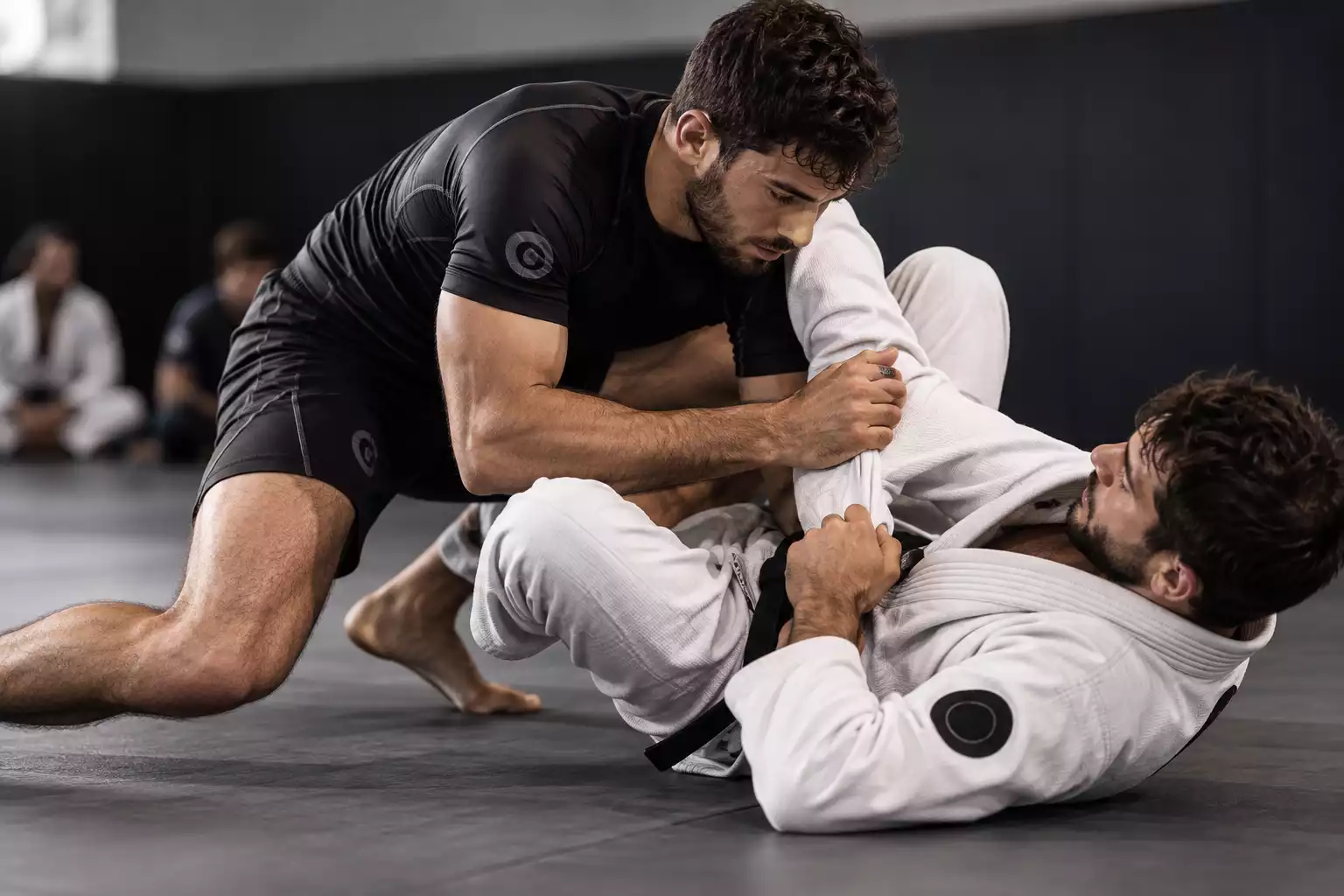
No-Gi is practiced without the traditional kimono, typically with a rash guard and grappling shorts.
The absence of clothing grips makes many situations more similar to those encountered in MMA.
Practitioners rely more heavily on body control, positioning, and movement to maintain dominant positions or set up submissions.
No-Gi therefore helps develop skills that can transfer directly to MMA grappling.
However, it does not fully reproduce cage fighting, particularly striking exchanges and fence work.
Is Gi BJJ Still Useful for MMA Fighters?
Yes. Gi training can help develop technical precision, positional control, patience, and an understanding of leverage.
However, grips on the kimono and certain Gi-specific strategies cannot be directly transferred to MMA.
For fighters preparing to compete in mixed martial arts, No-Gi and MMA-specific training with strikes should therefore play an important role in their preparation.
How to Find a Gym for MMA Grappling Training
Choosing the right gym depends on your objectives.
If you want to improve your Brazilian Jiu-Jitsu, an academy offering both Gi and No-Gi classes may be a good option.
If you're preparing for MMA competition, look for coaching that also covers wrestling, transitions involving strikes, and cage work.
Take time to evaluate the available disciplines, coaching experience, and training environment.
For more advice, explore our guide on how to find a Brazilian Jiu-Jitsu gym and choose the right academy.
6. How to Find Grappling Academies and Training Partners With OneJitsu
Whether you practice Brazilian Jiu-Jitsu, No-Gi, or want to develop your grappling skills for MMA, finding suitable training locations and partners is essential.
With OneJitsu, you can explore an interactive map dedicated to the Jiu-Jitsu community and discover academies in different cities and countries.
The app also allows you to connect with fellow practitioners through its integrated messaging system.
This makes it easier to discover new training opportunities, communicate with other grapplers, and stay connected with the community while traveling.
OneJitsu also helps users discover BJJ-related events, including open mats, seminars, and competitions.
Whether you train traditional BJJ or focus on grappling for MMA, OneJitsu helps you expand your training network.
Discover OneJitsu and find your next training opportunity.
7. FAQ: Brazilian Jiu-Jitsu and MMA
Can You Train MMA Without Practicing Brazilian Jiu-Jitsu?
Yes. You do not necessarily need to practice BJJ as a separate discipline to begin or progress in MMA.
However, fighters must develop solid grappling skills, including submission defense, positional control, and the ability to stand up from the ground.
These skills can be developed through Brazilian Jiu-Jitsu, wrestling, submission grappling, or MMA training that incorporates these techniques.
What Is the Difference Between Grappling and MMA?
Grappling involves wrestling, positional control, and submission techniques without striking.
MMA combines striking, takedowns, ground fighting, submissions, and other techniques within a unified ruleset.
Grappling is therefore an important component of MMA, but it does not cover every aspect of the sport.
Is Brazilian Jiu-Jitsu Better Than Wrestling for MMA?
There is no universal answer.
Wrestling is particularly useful for takedowns, takedown defense, and physical control.
Brazilian Jiu-Jitsu provides a deeper understanding of submissions, positional transitions, and ground defense.
In modern MMA, combining these skills is generally more important than deciding which discipline is superior.
Is Training in a Gi Useful for MMA?
Yes. Gi training can help improve technical precision, positional control, and an understanding of leverage.
However, grips on the kimono cannot be used in MMA.
Fighters should therefore complement Gi training with No-Gi grappling and MMA-specific sessions that incorporate strikes.
Should Beginners Start With BJJ or MMA?
Both approaches can work.
Starting with Brazilian Jiu-Jitsu allows beginners to build a strong foundation in ground fighting.
Joining an MMA gym with beginner-friendly classes allows students to develop several aspects of combat from the beginning.
The best choice depends on your goals, physical condition, and the quality of the coaching available.
Conclusion: Is Brazilian Jiu-Jitsu Still Essential in Modern MMA?
Brazilian Jiu-Jitsu has profoundly influenced the history of MMA and continues to shape the techniques used inside the cage.
However, mixed martial arts has evolved significantly since Royce Gracie's early UFC victories.
Today, mastering BJJ alone is generally not enough to compete successfully at the highest level.
Modern fighters must also develop wrestling, striking, takedown defense, and cage-control skills.
Brazilian Jiu-Jitsu is not necessarily essential as a separate training discipline, but the grappling, submission, and defensive skills it teaches remain fundamental to MMA.
The ability to combine these different skill sets is what defines the modern mixed martial artist.
Whether you practice BJJ recreationally, compete in No-Gi grappling, or train to improve your MMA performance, the key is to find the right training environment and keep learning.
With OneJitsu, stay connected to the global Brazilian Jiu-Jitsu community and discover new opportunities to train wherever you go.