Thinking about starting Brazilian Jiu-Jitsu (BJJ) but not sure where to begin? Between finding the right academy, preparing for your first class, understanding membership costs, and choosing a training schedule, getting started can raise plenty of questions.
Even experienced practitioners face similar challenges when moving to a new city or looking for a place to train while traveling.
How do you find a Brazilian Jiu-Jitsu gym near you? What should you look for before joining? And what actually happens during your first BJJ class?
This practical guide covers everything you need to know to choose the right academy, step onto the mats with confidence, and keep training wherever you go.
1. How to Find a Brazilian Jiu-Jitsu Gym Near You
Before choosing an academy, you need to find gyms that offer training suited to your experience level, goals, and schedule.
There are several ways to discover BJJ gyms near your home, workplace, or travel destination.
Search for BJJ Gyms on Google Maps
Google Maps is often the first place people look when searching for a Brazilian Jiu-Jitsu academy.
Try searches such as "BJJ gym near me," "Brazilian Jiu-Jitsu near me," or "BJJ classes" followed by your city.
You can usually find gym locations, opening hours, reviews, photos, and contact details.
However, not every academy maintains an up-to-date Google Business Profile. Class schedules and visitor policies may also change, so it's always worth confirming the details directly with the gym.
Explore BJJ Directories and Academy Websites
Martial arts directories, federation websites, and specialized platforms can help you discover additional training locations.
They may provide information about instructors, available classes, affiliations, and contact details.
Once you've identified a potential academy, visit its website to check whether it offers beginner classes, Gi or No-Gi training, and trial sessions.
Use a BJJ App to Discover Academies
Dedicated BJJ applications can make it easier to explore training opportunities in different cities and countries.
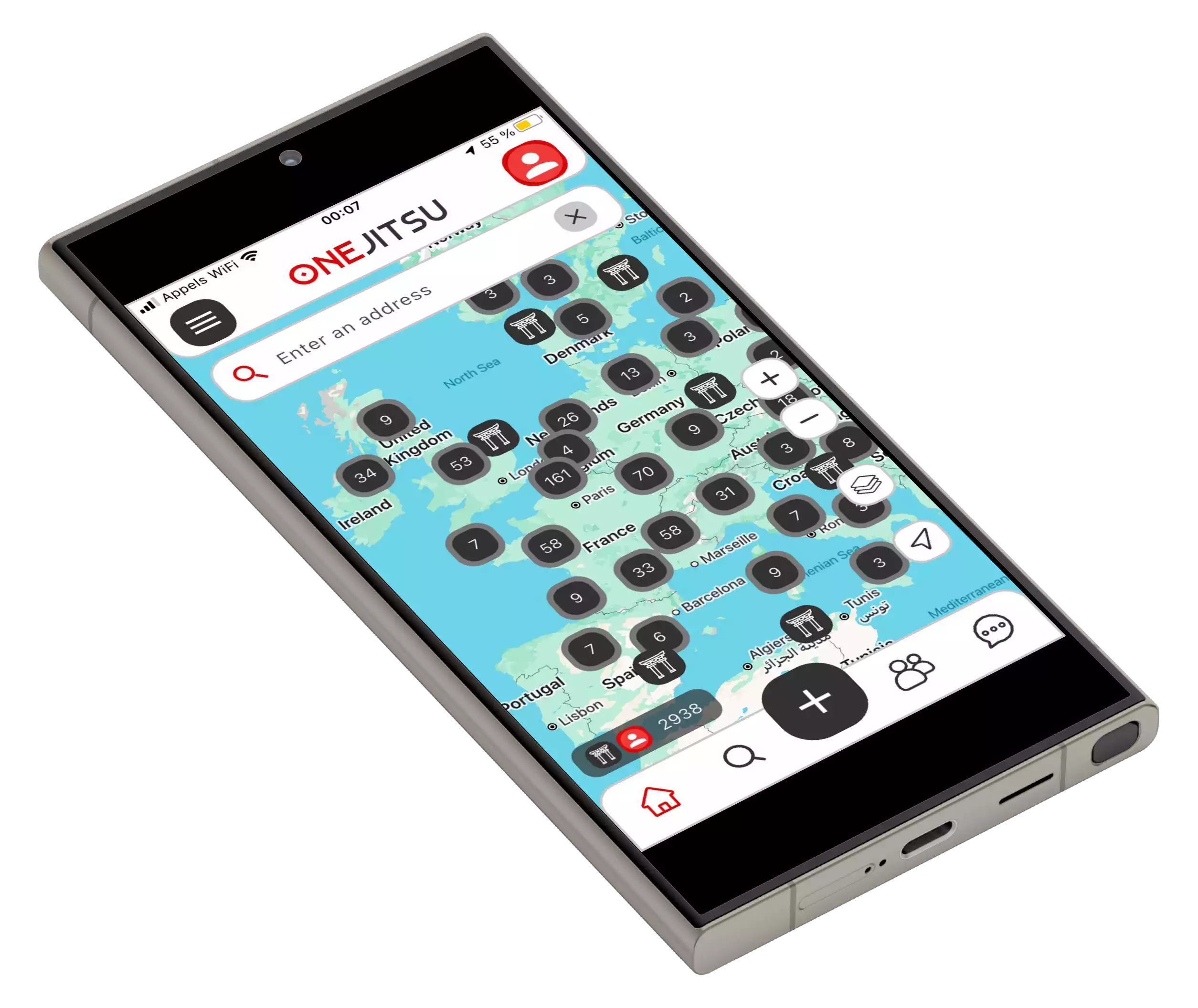
With OneJitsu, you can use an interactive map to discover Brazilian Jiu-Jitsu academies in your area and around the world.
This is especially useful if you're relocating, traveling for work, or planning a trip and want to keep training.
Finding a nearby academy is only the first step, though. The next challenge is choosing a gym where you'll feel comfortable learning and improving.
2. How to Choose the Right Brazilian Jiu-Jitsu Academy
Not all BJJ academies offer the same training experience.
Some focus heavily on competition, while others emphasize recreational training, self-defense, beginner development, or family-friendly classes.
The best Brazilian Jiu-Jitsu gym isn't necessarily the most famous one. It's the academy that matches your goals, experience level, and lifestyle.
Location and BJJ Class Schedule
Consistency is one of the most important factors in improving at Brazilian Jiu-Jitsu.
Choosing an academy close to your home or workplace makes it easier to train regularly.
Before signing up, check the class schedule and look for beginner-friendly sessions that fit your routine.
A conveniently located gym where you can train consistently may be a better choice than a prestigious academy that requires a long commute.
Gi vs No-Gi: Which BJJ Classes Should You Choose?
Brazilian Jiu-Jitsu is commonly practiced in two formats.
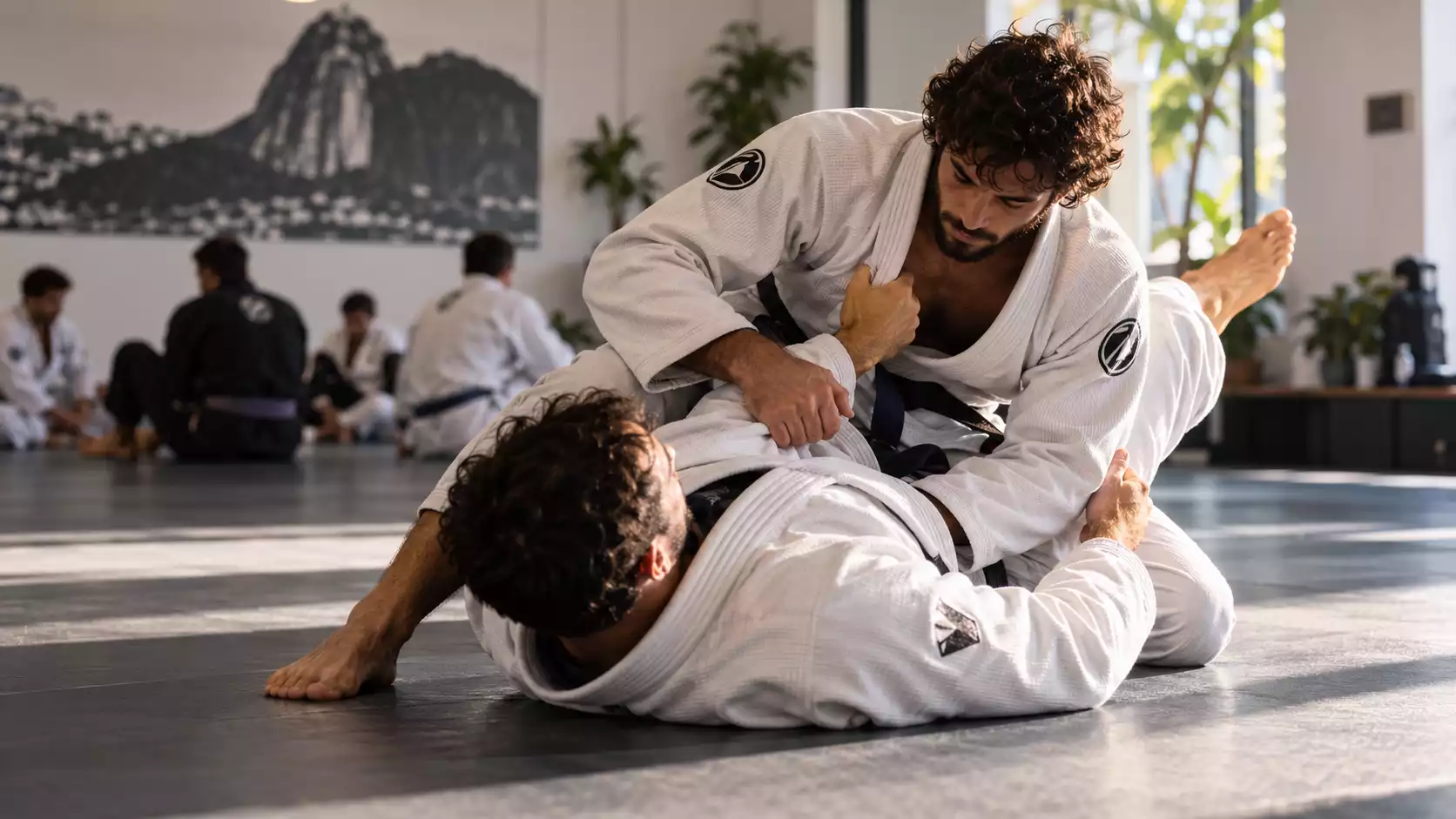
Gi BJJ involves training in a traditional uniform, or kimono. Practitioners can use grips on the jacket and pants to control opponents and execute techniques.
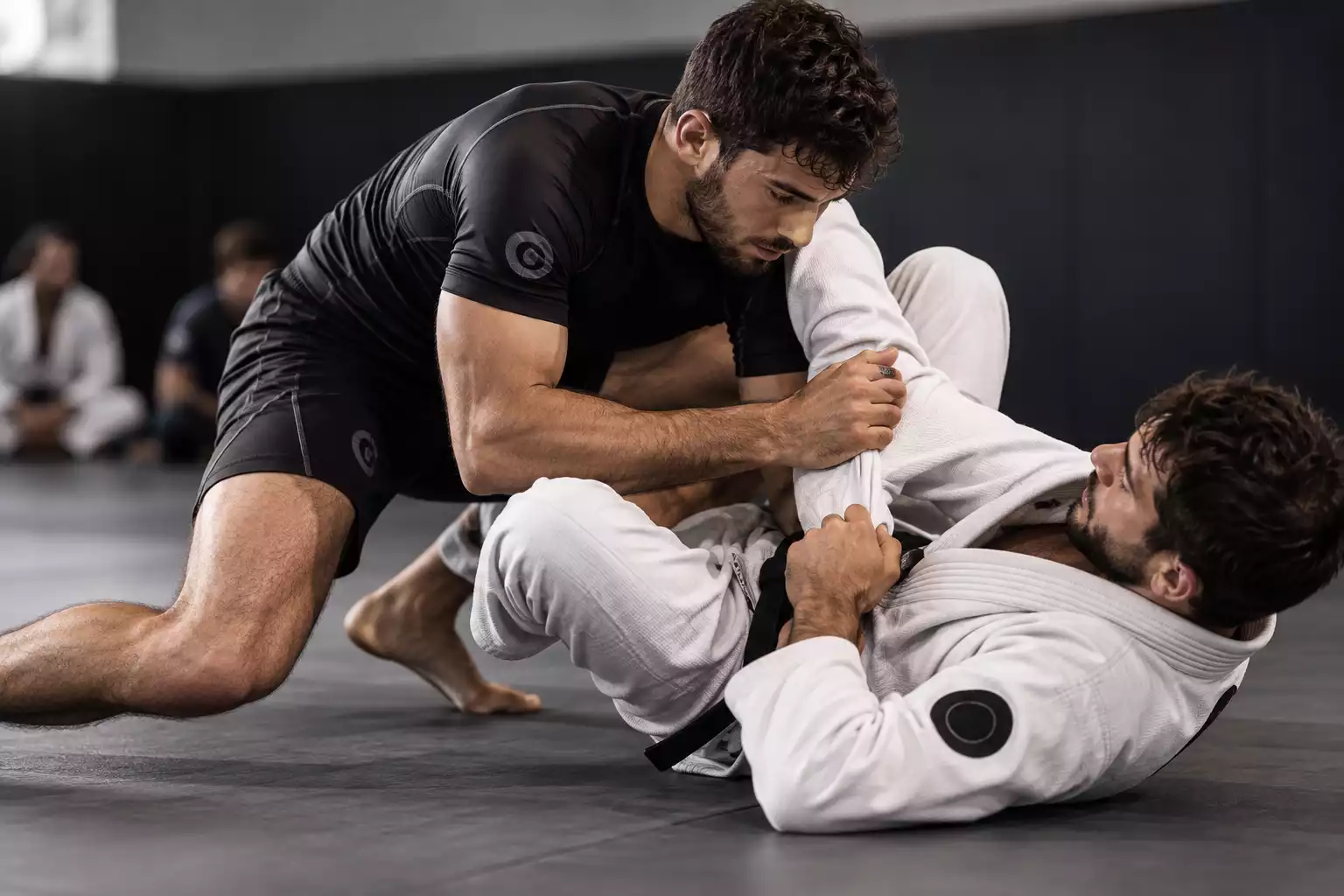
No-Gi BJJ is practiced without the kimono, usually in a rash guard and grappling shorts. Grabbing clothing is not permitted.
Some academies also offer submission grappling classes, which may incorporate techniques from wrestling and other grappling disciplines.
If you're new to BJJ, look for classes designed for beginners, regardless of which format interests you most.
To explore the differences between these training styles, read our guide to the benefits of No-Gi compared to Gi.
Instructor Experience and Teaching Style
A good BJJ instructor offers more than technical knowledge or a high belt rank.
Teaching ability, patience, communication, and attention to safety are equally important.
During a trial class, pay attention to how the instructor works with beginners.
Do they explain techniques clearly? Correct mistakes without embarrassing students? Adapt exercises to different skill levels?
A structured and supportive learning environment can make a significant difference to your progress.
Academy Atmosphere and Training Culture
The atmosphere of a BJJ gym plays a major role in your long-term enjoyment.
Brazilian Jiu-Jitsu involves close physical contact, which means trust and respect between training partners are essential.
A healthy academy culture encourages cooperation, controlled sparring, and mutual respect.
Notice how experienced students interact with newcomers.
You should feel comfortable asking questions, making mistakes, and learning without unnecessary pressure.
Hygiene and Safety on the Mats
Because BJJ is a close-contact sport, gym hygiene is particularly important.
Training mats should be cleaned regularly, changing areas should be maintained, and hygiene rules should be clearly communicated.
Students should wear clean training gear, keep their nails trimmed, and avoid training with contagious skin infections.
These precautions help reduce the risk of skin infections and protect the entire training community.
Why You Should Take a Trial BJJ Class
Even if an academy looks perfect online, nothing compares to experiencing a class in person.
A trial session allows you to meet the instructor, observe the training environment, and decide whether the teaching style suits you.
It's also an opportunity to ask about membership options, schedules, equipment, and beginner programs.
The right BJJ academy is one where you feel welcome, safe, and motivated to return.
3. What to Expect During Your First Brazilian Jiu-Jitsu Class
Walking into a BJJ academy for the first time can feel intimidating.
You'll encounter unfamiliar movements, new terminology, and a sport built around close physical contact.
The good news is that a well-structured beginner class should introduce you to the fundamentals gradually.
Arriving at the Academy and Meeting Your Instructor
When you arrive, introduce yourself to the instructor and explain that it's your first BJJ class.
They should explain the class structure, basic safety rules, and any academy-specific traditions.
Some gyms ask students to bow before stepping onto the mats or greeting the instructor. These customs vary between academies.
Don't hesitate to ask where to stand, what equipment to use, or how to participate.
Warm-Up and Movement Drills
Most BJJ classes begin with a warm-up designed to prepare your body for training.
Depending on the academy, this may include mobility exercises, rolls, bridges, shrimping movements, and other grappling-specific drills.
These exercises introduce movement patterns that you'll use throughout your BJJ journey.
The length and intensity of the warm-up depend on the instructor and class format.
Learning Your First BJJ Techniques
After warming up, the instructor usually demonstrates one or more techniques.
Students then practice the movements with a partner at a controlled pace.
Your first class might introduce:
- Fundamental positions such as guard, mount, and side control.
- Basic escapes and positional movements.
- Balance, leverage, and body positioning.
- Introductory submissions and the safety rules associated with them.
You don't need to memorize everything immediately.
The goal is to begin understanding how technique, positioning, and controlled movement work together.
To learn more about the fundamentals, explore our complete guide to Brazilian Jiu-Jitsu.
Will You Have to Spar During Your First BJJ Class?
Sparring, often called rolling in Brazilian Jiu-Jitsu, is a form of live training against a resisting partner.
It allows practitioners to apply techniques in more realistic situations.
However, not every academy expects beginners to spar during their first class.
You may be invited to observe, participate in controlled positional drills, or work with an experienced student.
The most important thing is to respect your limits, communicate with your training partner, and avoid forcing techniques.
Learning to Tap: The Most Important BJJ Safety Rule
In Brazilian Jiu-Jitsu, tapping out means signaling that you want your partner to stop applying a submission.
You can tap repeatedly on your partner or the mat, or clearly say "tap" if you cannot use your hands.
Always tap early, before a submission causes significant pain or injury.
Your partner must release the technique immediately.
Tapping is not a failure. It's an essential part of training safely and learning Brazilian Jiu-Jitsu.
Beyond physical skills, BJJ can also help build confidence and mental resilience. Discover the mental benefits of Brazilian Jiu-Jitsu.
4. How Much Does It Cost to Join a BJJ Gym?
The cost of Brazilian Jiu-Jitsu depends on your country, city, academy, training frequency, and equipment requirements.
Before joining, consider three main categories of expenses.
BJJ Gym Membership Fees
Academies offer different membership options, including monthly subscriptions, annual memberships, limited class packages, and unlimited training.
Prices vary significantly by location.
For example, some academies in Europe may charge the equivalent of €350–€700 per year, while many gyms in major cities or other countries charge substantially more.
Always check what's included in the membership, such as Gi classes, No-Gi sessions, open mats, and access to additional facilities.
What Equipment Do You Need for Brazilian Jiu-Jitsu?
For Gi training, you'll generally need a BJJ kimono and a belt corresponding to your rank.
An entry-level Gi may cost approximately €80–€150 in some European markets, although prices vary by brand and country.
For No-Gi, a rash guard and suitable grappling shorts are usually enough.
A mouthguard is also recommended to help reduce the risk of dental injuries.
Before buying equipment, check your academy's dress code. Some gyms have specific requirements regarding uniform colors or patches.
Additional BJJ Training Expenses
Other costs may include:
- Registration or federation fees.
- Seminars and training camps.
- Competition entry fees.
- Travel and additional equipment.
Some gyms offer free or discounted trial classes, while others charge a one-time visitor fee.
Confirm the details before attending.
5. How to Find BJJ Training While Traveling: Drop-Ins and Open Mats
One of the most rewarding aspects of Brazilian Jiu-Jitsu is its international community.
In many countries, academies welcome visiting practitioners for occasional training sessions or open mats.
Traveling doesn't have to mean taking a break from BJJ.
What Is a BJJ Drop-In?
A drop-in is a one-time training visit to an academy where you're not a regular member.
It might involve attending a technique class, joining a sparring session, or participating in an open mat.
Some academies welcome visitors regularly, while others restrict certain classes to members.
Contact the gym before arriving to confirm its visitor policy.
How to Find a BJJ Open Mat Near You
An open mat is a less structured training session where practitioners can drill techniques, exchange knowledge, or spar with different partners.
Some open mats welcome visitors from other academies, but participation rules vary.
You can find open mats through academy websites, social media pages, local BJJ communities, and specialized platforms.
Always check the schedule, skill-level requirements, Gi or No-Gi format, and any visitor fees.
BJJ Gym Etiquette When Visiting Another Academy
A little preparation goes a long way when training at a new gym.
Contact the academy in advance and ask whether drop-in fees, sometimes called mat fees, apply.
Check the dress code, training schedule, and any rules for visiting students.
When you arrive, introduce yourself to the instructor, follow the academy's guidelines, and adjust your sparring intensity to your training partners.
Visiting other academies is a great opportunity to meet new people, experience different teaching styles, and become part of the wider BJJ community.
6. Find BJJ Academies and Training Partners With OneJitsu
Searching for Brazilian Jiu-Jitsu gyms one by one can be time-consuming, especially when traveling or exploring an unfamiliar city.
OneJitsu was created to help connect the global Brazilian Jiu-Jitsu community and make training opportunities easier to discover.
Discover BJJ Academies on an Interactive Map
OneJitsu features an interactive map that helps you discover Brazilian Jiu-Jitsu academies in different cities and countries.
Whether you're looking for a gym near home or planning your next trip, the app provides a way to explore training locations in one place.
Connect With Brazilian Jiu-Jitsu Training Partners
Beyond finding academies, OneJitsu helps practitioners connect with other members of the BJJ community.
Its integrated messaging system makes it easier to communicate with fellow practitioners and arrange training opportunities.
Explore BJJ Open Mats, Seminars, and Events
OneJitsu also helps you discover events related to Brazilian Jiu-Jitsu, including open mats, seminars, and competitions.
Whether you're a beginner or an experienced grappler, the goal is simple: help you discover more opportunities to train and stay connected with the BJJ community wherever you go.
Discover OneJitsu and find your next BJJ training opportunity.
Discover academies and connect with the global BJJ community through the OneJitsu app.
7. FAQ: Finding a BJJ Gym and Starting Brazilian Jiu-Jitsu
Can You Start Brazilian Jiu-Jitsu at 30, 40, or 50?
Yes. Many people begin Brazilian Jiu-Jitsu as adults without any previous martial arts experience.
The key is to find an academy that accommodates your fitness level, progress at your own pace, and respect your physical limits.
If you have a medical condition or concerns about your ability to train, consult a healthcare professional before starting.
Do You Need to Be Fit Before Starting BJJ?
You don't need to be in excellent physical shape to begin Brazilian Jiu-Jitsu.
Your first classes may feel physically demanding, but consistent training can gradually improve your endurance, mobility, and coordination.
A beginner-friendly academy should allow you to adjust the intensity to your abilities.
How Can You Tell if a BJJ Gym Is Good?
Look for clear instruction, respectful training partners, appropriate safety practices, and clean facilities.
A trial class is one of the best ways to evaluate whether an academy is right for you.
Can You Try Brazilian Jiu-Jitsu Without a Gi?
That depends on the academy.
Some gyms lend uniforms to first-time students, while others allow beginners to attend an introductory class in suitable athletic clothing.
Contact the instructor before your visit to confirm what you need to bring.
What's the Difference Between a BJJ Class and an Open Mat?
A regular BJJ class is usually led by an instructor who demonstrates techniques and organizes structured drills.
An open mat is generally a less structured session where practitioners can drill, exchange techniques, or spar.
Some open mats are suitable for beginners, but it's best to confirm the participation rules with the academy.
Conclusion: Find a BJJ Academy That Makes You Want to Keep Training
Finding the right Brazilian Jiu-Jitsu gym isn't simply about choosing the closest academy or the one with the most accomplished competitors.
Instructor quality, atmosphere, scheduling, safety, and enjoyment all play an important role in your long-term progress.
Take the time to explore different academies, ask questions, and attend a trial class before making your decision.
Once you've found your rhythm, don't hesitate to visit other gyms, attend open mats, or keep training while traveling.
With OneJitsu, your connection to the Brazilian Jiu-Jitsu community can extend far beyond your home academy.